
Back to School Wellness for Kids and Teachers

Back-to-school season changes the body’s routine almost overnight. Kids go from summer movement to hours in chairs, heavier backpacks, earlier mornings, and more screen time for homework. Teachers make the same shift too, often standing, bending, reaching, sitting, and carrying supplies all day.
That combination can leave backs, necks, shoulders, hips, and feet feeling tired before the school year is even in full swing.
The good news is that small habits help. A better backpack fit, a few movement breaks, a smarter classroom setup, and realistic posture cues can reduce daily strain for students and teachers. This guide is informational only and is not a substitute for medical care. If pain is sharp, persistent, worsening, or linked with numbness, weakness, dizziness, or trouble walking, a licensed health professional should evaluate it.
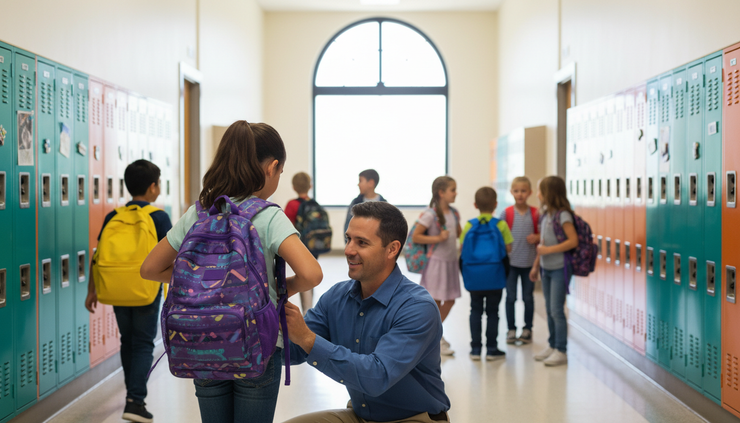
Backpacks should fit the student, not the other way around
A backpack can look harmless, but daily weight adds up. Books, binders, lunch, water bottles, sports gear, tablets, and extra clothes can quickly turn into a load that pulls the shoulders back and the head forward.
A common rule of thumb is to keep a backpack around 10 to 15 percent of a child’s body weight when possible. That is not a perfect number for every child, but it gives families a practical target. A smaller child, a child with an injury, or a student who walks a long distance may need an even lighter load.
The fit matters just as much as the weight.
A well-fitted backpack should:
Sit high on the back, not sag toward the hips
Rest close to the body
Use both shoulder straps
Have wide, padded straps when possible
Avoid swinging side to side while walking
Keep heavier items closest to the spine
One-shoulder carrying is common, especially with older students. It may feel easier for a minute, but it can make one side of the body work harder all day. Encourage two-strap use without turning it into a lecture. A simple reminder like, “Both straps before you head out,” works better than a long speech during a rushed morning.
The 30-second backpack check
Once a week, empty the backpack completely. This is often where the extra weight hides.
Look for:
Old worksheets
Library books that can stay home
Duplicate notebooks
Extra water bottles
Toys, gadgets, or supplies that are not needed
Sports items that belong in a separate bag
Then reload the backpack with the heaviest items closest to the back. If the school allows digital copies, shared classroom supplies, or locker use, those options can also help reduce daily carry weight.
Teachers can do a version of this too. Many teachers carry laptops, water bottles, lesson materials, books, classroom supplies, snacks, and personal items. A rolling cart, crossbody bag with a wide strap, or a backpack with a sternum strap may reduce strain. The best choice depends on the building, stairs, parking distance, and daily schedule.
Posture is a habit, not a perfect pose
Posture advice often sounds like “sit up straight,” but bodies are not meant to freeze in one position. A rigid, perfect pose can become uncomfortable too. A better goal is comfortable alignment with frequent movement.
For students, that means feet supported, shoulders relaxed, and work positioned so the head does not have to hang down for long periods. For teachers, it means changing positions throughout the day instead of standing in the same stance or leaning over small desks for hours.
Good posture usually looks relaxed, not stiff.
Try these simple cues:
Keep ears roughly over shoulders when reading or using a screen
Let shoulders drop away from the ears
Keep both feet supported when sitting
Bring the book, tablet, or paper closer instead of folding down toward it
Shift positions before discomfort builds
Children often hear posture corrections as criticism. Making the cue playful can help. Try “tall like a tree,” “shoulders soft,” or “bring the page to your eyes.” For older students, explain the reason in plain language. Neck muscles work harder when the head hangs forward for long periods.

Sitting all day needs movement built in
School involves a lot of sitting. Students sit during lessons, lunch, reading time, testing, bus rides, and homework. Teachers may stand more than students, but they often stand in one place, lean over tables, or sit for planning and grading.
The body handles sitting better when movement shows up often. That does not require a full workout. Short, simple resets can help wake up muscles, reduce stiffness, and support attention.
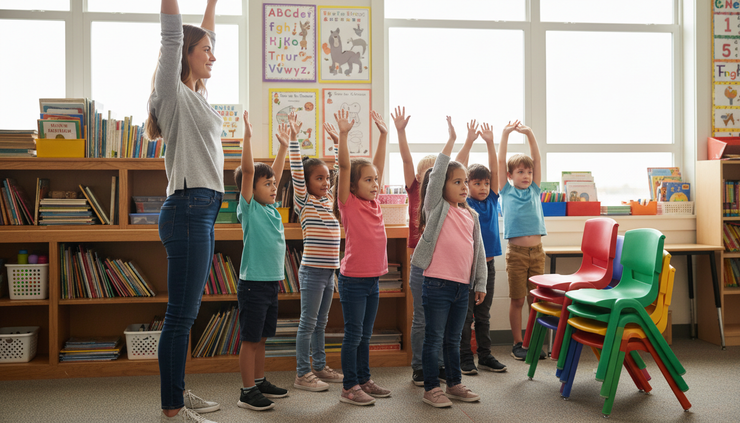
A movement break can be as short as 30 to 60 seconds.
Good classroom-friendly options include:
Standing up and reaching overhead
Rolling shoulders back and down
Marching in place
Gentle side bends
Calf raises beside a chair
Neck turns without forcing the range
Wrist and finger stretches after writing or typing
Teachers can tie movement to natural transitions. Stand and stretch before math. Do three shoulder rolls after reading. March in place while counting. Walk to turn in papers instead of passing everything down a row.
For teachers, movement breaks are not just for students. A teacher may spend hours circulating, crouching beside students, writing on boards, lifting bins, and managing the room. A few quick resets during the day can protect energy.
Try this teacher reset between classes or lessons:
Stand with feet hip-width apart.
Take three slow breaths.
Roll shoulders gently backward.
Squeeze shoulder blades lightly, then release.
Stretch calves by stepping one foot back.
Switch sides.
Shake out hands and wrists.
This can take less than one minute. The key is repetition. A tiny habit done several times a day beats a long stretch routine that never happens.
Desks, chairs, and screens should match real bodies
Classroom furniture is rarely perfect for every student. Kids grow at different rates, and classrooms often use standard desks and chairs. Small adjustments can still make a difference.
For sitting, aim for:
Feet flat on the floor or on a stable support
Knees near hip level
Back supported by the chair when possible
Work close enough that the child does not need to hunch
Elbows resting comfortably during writing or typing
If a child’s feet do not reach the floor, a sturdy footrest can help. At home, that might be a step stool, a firm box, or a stack of large books secured so they do not slide.
Screens deserve special attention. Tablets and laptops often pull the head downward. For homework, raise the screen when possible and use a separate keyboard if the setup allows. For reading, a book stand or binder can bring pages closer to eye level.
Teachers also need to think about their own classroom patterns. Reaching high to write, bending low to help students, twisting to use a projector, or looking down at a laptop for long planning blocks can all add up.
Small teacher adjustments include:
Switch sides when carrying materials
Place frequently used supplies between waist and shoulder height
Avoid twisting while lifting bins or stacks of books
Sit on a low stool when helping younger students at small tables
Raise a laptop for planning when working for longer periods
Wear supportive shoes, especially on heavy standing days
None of these habits need to be perfect. The goal is to reduce repeated strain.
Warning signs should not be ignored
A little tiredness after the first weeks of school can be normal. New routines take adjustment. Pain that keeps returning or changes how a child or adult moves deserves more attention.
Watch for patterns. Does a student complain every day after carrying a backpack? Does a teacher feel neck pain after grading on a laptop? Does a child avoid recess because legs or back feel sore? The pattern can point to the cause.
Sign | What it may mean | A practical next step |
Red marks from backpack straps | The load may be too heavy or straps may be too narrow | Lighten the backpack and adjust the straps |
Backpack hangs below the waist | The fit may be too loose or the pack may be too large | Tighten straps or try a smaller backpack |
Headaches after screen time | Neck or eye strain may be involved | Adjust screen height and take breaks |
Back pain after sitting | Chair fit or long sitting blocks may be a factor | Add foot support and movement breaks |
Shoulder pain on one side | One-strap carrying may be causing uneven load | Use both straps and reduce weight |
Numbness, tingling, weakness, or severe pain | A medical issue may need evaluation | Contact a qualified health professional |
Pain is the body’s signal to change something. It does not mean anyone failed. It means the routine may need a better fit.
Sleep, hydration, and stress also affect posture and comfort
Posture and backpacks are only part of back-to-school wellness. A tired, dehydrated, stressed body often feels aches more strongly.
Sleep changes quickly when school starts. Earlier alarms, homework, activities, and screen use can make bedtime harder. Children and teens need consistent sleep routines, and teachers need recovery time too. A steady bedtime, a calmer evening routine, and less late-night scrolling can help the body handle school-day demands.
Hydration matters as well. Students may avoid drinking water because bathroom breaks feel inconvenient. Teachers may do the same because they cannot easily leave the classroom. Yet dehydration can contribute to fatigue and headaches. A refillable water bottle can help, especially when it is easy to clean and allowed by school policy.
Stress can also show up in the body. Tight shoulders, clenched jaws, stomachaches, headaches, and restless sleep can all rise during big transitions. Back-to-school season includes new teachers, new students, new schedules, and new expectations. Simple routines can make the day feel more predictable.
Helpful routines include:
Packing the backpack the night before
Setting shoes and clothes in one place
Keeping homework supplies in a consistent spot
Using a short morning checklist
Planning a calm after-school transition
Giving teachers a few quiet minutes before or after the school day when possible
For teachers, the workload can expand fast. Classroom setup, parent communication, lesson planning, grading, and student needs compete for attention. Short pauses during the day are not wasted time. They help the body and mind reset.

A simple back-to-school wellness checklist
The best plan is the one that survives busy mornings. Keep it simple enough to repeat.
Use this checklist during the first few weeks of school:
Check backpack weight once a week
Use both shoulder straps
Keep heavy items close to the back
Adjust straps so the backpack sits high
Add movement breaks during long sitting blocks
Support feet during homework
Raise books or screens closer to eye level
Change positions often
Wear comfortable, supportive shoes
Drink water throughout the day
Pay attention to repeated pain
Ask for help when symptoms do not improve
For families, this can become part of Sunday night prep. For teachers, it can become part of classroom routines. Students do not need a long lecture on body mechanics. They need repeated, easy habits that fit real school life.
Back-to-school wellness for kids and teachers starts with small details: lighter bags, better sitting positions, more movement, and less strain from repeated daily habits. A healthier school year does not require a perfect setup. It starts with noticing what the body does all day and making one useful change at a time.


Comments